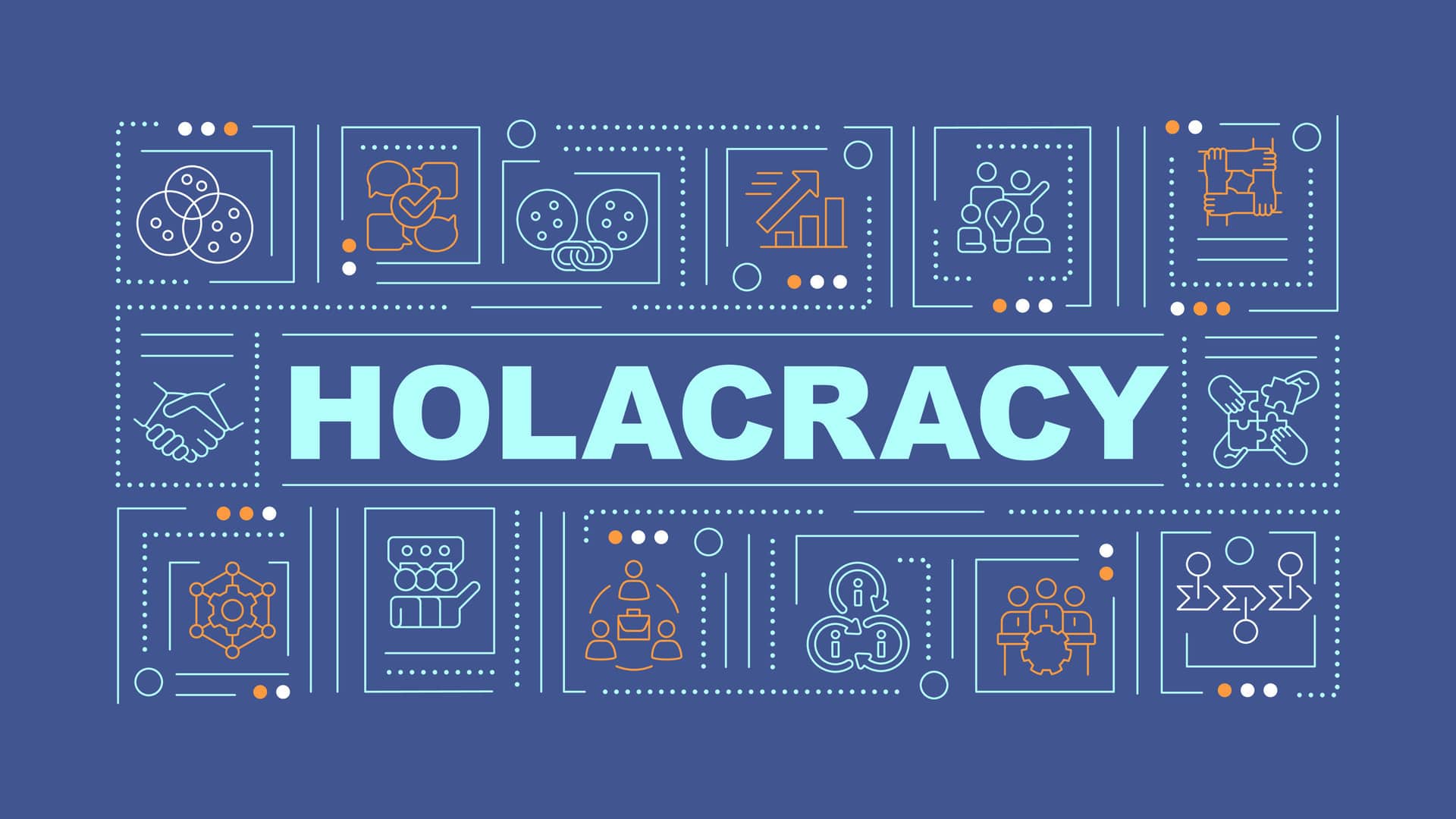
Holacracy is an innovative management system that replaces traditional hierarchical structures with greater flexibility and a more effective distribution of authority. It is designed for organisations that need to respond quickly and efficiently to changes in their environment. Beyond redefining roles and responsibilities, it provides transparent, structured processes for addressing internal tensions and problems.
Structure and roles in Holacracy

In Holacracy, an organisation is divided into circles, each containing a set of roles. Every role has clearly defined responsibilities and authority, and one person may hold several roles at the same time. Instead of job titles, this structure emphasises the work and purpose of each role, giving people greater autonomy and responsibility within it.
Managing tensions and addressing problems
A notable feature of Holacracy is its systematic approach to tensions and problems. Anyone can formally raise a difficulty or tension they encounter in their role. A transparent, defined process helps people address these issues promptly and effectively.
Governance and tactical meetings
Regular circle meetings provide a process for addressing problems. They fall into two categories: governance meetings and tactical meetings. Governance meetings review and revise circle structures, roles and policies, while tactical meetings address day-to-day operational issues.
The role of managers in Holacracy
Contrary to a common assumption, Holacracy changes managers’ roles rather than removing them. Each circle has a Lead Link responsible for coordination and helping the circle achieve its objectives. This role is closer to a facilitator than a commander: its purpose is to support workflow and improve role performance rather than exercise control over people.

Processes at the centre of decision-making
In Holacracy, processes and rules are central to decision-making. Organisational decisions and changes must follow clear, defined procedures. This helps decisions be implemented fairly and without discrimination, and keeps everyone informed about how decisions and changes take place.
Conclusion
By emphasising transparency, distributed authority and a systematic approach to tensions, Holacracy helps organisations respond more effectively to change. Its focus on processes rather than individuals supports stronger performance and allows employees to work with greater responsibility and independence. It is both a contemporary management approach and a tool for organisational transformation in a complex, rapidly changing world.